Key takeaways
- Procurement is the main channel of public corruption. Nigerian officials say contract and procurement fraud makes up roughly 90% of public sector corruption cases.
- Six schemes explain most of it: tender splitting, abuse of direct awards, related bidders, inflated contracts and variations, insider information, and false credentials.
- Each scheme leaves a data trail. Single bidders, clusters of awards just under thresholds and companies sharing directors are measurable red flags.
- What works is known: end-to-end e-procurement, open contracting data, beneficial ownership checks, independent review and cross-debarment.
Where the word comes from
South Africans coined the word tenderpreneur for a politically connected person who wins government tenders without the capacity to deliver, then subcontracts the work for a fraction of the price and keeps the rest. The word has since travelled across the continent because the model has too.
The damage is measurable. More than 80% of the African countries ranked lowest on procurement processes in the Africa Integrity Indicators also sit among the bottom ten on the 2025 Corruption Perceptions Index. A 2026 national assessment of Zimbabwe’s system, commissioned with the African Development Bank, found corruption risks at every stage, from planning to contract delivery.
The six schemes, and where they surfaced in 2026
| Scheme | How it works | Red flag in the data | Seen in 2026 |
|---|---|---|---|
| Tender splitting | One large purchase is broken into many small ones below the open-tender threshold | Clusters of awards just under a threshold, same supplier group | South Africa, Tembisa Hospital |
| Direct award abuse | Competition is skipped by invoking urgency, sole supply or national interest | High share of contracts awarded without a tender | Gabon, Ghana |
| Related bidders | Several companies with the same owners bid against each other to fake competition | Shared directors, addresses or phone numbers among bidders | Kenya |
| Inflation and variations | Prices are padded at award, or contract sums grow through variations after award | Prices far above reference prices; large post-award variations | Nigeria |
| Insider information | Officials leak confidential evaluation or pricing information to a favoured bidder | Winning bid tightly matched to the internal estimate | Ethiopia power project, World Bank case |
| False credentials | Bidders misstate experience, key experts or commissions paid | Key experts who never appear on site; borrowed references | Somalia project, World Bank case |
Country by country
South Africa: splitting below the line
At Tembisa Hospital, the Special Investigating Unit says syndicates used fraudulent documents in a manipulated three-quote system and kept each transaction under R500,000 to avoid open tenders. It traced about R2 billion in losses and about R122 million in corrupt payments to officials. One alleged syndicate leader is linked to 75 companies, 73 of them irregularly appointed. The accused have not been convicted.
Kenya: companies that compete with themselves
Kenya’s Public Procurement and Asset Disposal Act sets clear eligibility rules, and its regulators say firms with the same beneficial owners may not bid for the same tender, because that is collusive tendering. Investigators keep finding it anyway. Africa Uncensored’s Captured series, built on leaked payment data from the government’s financial system, described a group of companies allegedly linked to one politician that bid for the same tender, with employees listed as directors. The politician declined to respond.
Oxford researchers have documented forged tender committee minutes uploaded to the payment system and forged expert signatures. In 2026, PPRA reviewed about 10% of 50,142 published notices and found compliance gaps in 42% of those it checked. Kenya’s score for procurement procedures on the Ibrahim Index fell 36.4 points over the decade to 2025.
Nigeria: inflation and the variation backdoor
Nigeria’s Bureau of Public Procurement lists contract inflation, splitting contracts to evade thresholds and phantom contracts among its recurring problems. In May 2026 it issued guidelines on contract variations, warning that variations must not become a backdoor for cost inflation and scope creep. BPP says price checks saved over N1.1 trillion in 2025, and it has introduced a debarment policy for erring contractors. These figures are the agency’s own and await independent audit.
Ghana: when the exception becomes the rule
Ghana’s procurement law makes competitive tendering the default, but allows sole sourcing in defined cases. In 2026 contracts under the government’s “Big Push” road programme came under scrutiny; the ministry said only 44% of major contracts were sole-sourced. Parliament is amending the law to tighten sole sourcing and cut tender timelines from 23 weeks to eight, so that poor planning can no longer pass as an emergency.
Gabon: direct awards by default
Gabon’s procurement code caps direct agreements at 15% of an entity’s annual procurement value. In 2025, more than 93% of contracts were awarded without a tender, the Council of Ministers itself reported. A World Bank public finance review found direct contracts made up 90% of procurement value in 2024. The government has decreed an end to direct awards; the test is enforcement.
Senegal: contracts outside the plan
In October 2026, Senegal’s higher education ministry said a CFA 6 billion contract under the “one student, one computer” programme had never gone through the procurement commission, ARCOP or the central procurement directorate. ARCOP itself said the programme was not in the procurement plans. Senegal has also closed a long-standing gap: since April 2026, contracts classified as defence secrets go to a dedicated control commission.
Multinationals and consultants are not immune
In March 2026 the World Bank debarred three PwC firms in Africa for 21 months after they obtained confidential procurement information from project officials in 2019 to influence a consultancy award on an Ethiopian power project. In June it debarred a Kenyan IT firm and its director for at least five years for misrepresenting the availability of key experts on a Somalia contract. In September it debarred a surveying firm that falsely certified it paid no commissions, and in October seven Nigerian and Tanzanian parties under settlement agreements.
See today’s live opportunities
Browse the live board free, no login. Full details, documents and source links from US$2 a month.
The procedures and standards that beat these schemes
The fixes are not secret. They are written into international standards that African regulators already use.
- End-to-end e-procurement with a full audit trail. It kills backdating and forged minutes. Tanzania made off-system buying a crime; Kenya has refused payment for deals outside e-GP.
- Open contracting data. Publishing every stage in the Open Contracting Data Standard lets journalists, auditors and rival bidders spot splitting and single bidders. Rwanda publishes data back to 2013.
- Beneficial ownership checks. Knowing who really owns each bidder exposes related bidders and fronting. Twelve regulators committed to using it at the Lusaka workshop in July 2026.
- Reference prices and price intelligence. Rwanda’s RPPA publishes reference prices; Nigeria’s BPP uses price checks against inflation.
- Hard limits on direct awards. Gabon’s 15% cap and Ghana’s amendment only work if breaches carry sanctions.
- Independent review and whistleblower protection. Review boards that annul flawed awards, and real protection for officials like Babita Deokaran, killed in 2021 after flagging payments at Tembisa.
- Cross-debarment. Development banks share debarments, so a firm banned by the World Bank is often banned by the African Development Bank too.
These measures follow the UN Convention against Corruption, whose Article 9 requires procurement based on transparency, competition and objective criteria, and the UNCITRAL Model Law on Public Procurement.
Why open markets are part of the cure
Most of these schemes need a small, closed pool of bidders. Splitting, related bidders and sole sourcing all work best where few outsiders are watching or competing. Research on donor-funded contracts in more than 100 countries found that widening access to tenders and adding oversight cut single bidding, the standard red flag for corruption risk. Every capable firm that can bid across a border is one more competitor a corrupt official has to keep out. We make that argument in full in One Market, Fewer Bribes.
Where VeriAfrica fits
VeriAfrica takes tenders from official sources only, so you see the published opportunity, not a broker’s version. The Verified badge means a person has checked a business’s identity and ownership before it appears to partners. Matchmaking only connects vetted firms. GOMAT, the in-app AI tender advisor, flags warning signs in a tender and explains each country’s review process.
Sources
- allAfrica, BPP and the 90% figure; AFIDEP, digitalisation and integrity; NewsDay, Zimbabwe assessment
- SIU, Tembisa interim report and Syndicate X
- Oxford OpenPEA, public procurement in Kenya; allAfrica, PPRA review; Daily Nation, Ibrahim Index 2026
- Africa Uncensored, Captured series (video transcript supplied by the author); GIJN, investigating procurement data in Africa
- Leadership, BPP on recurring issues; Federal Ministry of Information Nigeria, variation guidelines; The Guardian Nigeria, BPP savings
- allAfrica, Big Push contracts; Modern Ghana, competitive tendering as the norm; AHK Ghana, timelines cut
- Gabonreview, 93% without tender; Gabon Media Time, 90% direct contracts in 2024
- allAfrica, “one student, one computer”; SenePlus, Decree 2026-807
- World Bank, PwC Africa debarment; Citizen Digital, Kenyan IT firm sanctioned; African Media Agency, surveying firm debarred; Youverify, seven parties debarred
- Open Contracting Partnership, Lusaka communiqué; RPPA, publications; Business Daily, no payments outside e-GP
- Dávid-Barrett, Fazekas and Hellmann, Controlling corruption in development aid; Orrick, cross-debarment
Get every African opportunity in your language
Tenders, grants, jobs and scholarships from 50+ African countries, translated and filtered for you. Browse free, full details from US$2 a month.
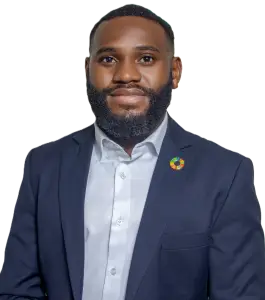
Founder and CEO of VeriAfrica. Urban planner by training, development consultant by practice, developer by love. Author of The Invisible Border.